Shipping containers have long been found to have a myriad of uses, from storage to houses. Who knew a shipping container would make a terrific pool!!
One Canadian couple is making a splash transforming shipping containers into backyard swimming pools. (We always knew those shipping containers were universal!)
Paul and Denise Rathnam launched Modpools earlier this year and the idea has taken off, with orders mostly coming from the hottest locales in North America, particularly California, Nevada, Texas and Florida.
“The traditional pool is a symbol of excess and waste. This is a little more modern, more modest. We’re repurposing something rather than recycling. This pool can be resold, and you can take it with you if you move,” Paul Rathnam told Vancouver Sun.
It’s an interesting concept, for sure, and the design, once installed, looks pretty slick. It’s as if your backyard was always destined to house a shipping container.
The standard size Modpool is eight feet wide by 20 feet long, and just over five feet deep. It also comes with a clear, acrylic window on one side, which is actually a pretty spiffy design element. Customers can opt to add another acrylic window on the other side for a see-through look if they want one.
In Canada, after delivery, a Modpool will cost you $35,000 plus tax, which could be a cheaper alternative for families planning on installing an in-ground swimming hole.
Your backyard should be your summer sanctuary…your perfect place away from the rest of the world. Here’s how!
Summer is the season to be outdoors. It’s the perfect time for backyard barbecues, neighborhood socials, and late-night evenings on the patio. You don’t need to travel to a luxurious and exotic location to enjoy spending time outdoors. Make your own backyard a summer paradise with these eight simple suggestions.
Inspect and Update Wooden Decks
To make your backyard a summer haven, take some time to inspect and update your deck. Wooden patios and decks can be warped by cold weather, so you’ll want to replace loose or missing slats as needed. Sand, stain, and seal your deck once you’ve made sure it’s structurally sound. If you have a stone patio, check for missing pieces and update as needed. Once this is complete, you’ll have a shiny and appealing deck you can decorate with patio furniture—creating a relaxing sitting area for summertime.
Purchase Patio Furniture and Essentials
Once you have a designated patio or deck space, you’ll want to add some patio furniture so you can sit down, mingle with friends and family, and relax. Consider purchasing weatherproof patio furniture that is both comfortable and durable. Patio furniture can be exposed to harsh, seasonal weather, so you’ll want to make sure it lasts for years.
Get the basics, including some lounge chairs, an umbrella, a hammock, and an outdoor table so you can enjoy meals or games outside. In addition to patio furniture, you may want to buy or build an outdoor fire pit. It’s a simple feature that adds so much to your backyard. Sit around the fire and socialize, roast marshmallows or even cook dinner on your own backyard fireplace.
Add Colorful Cushions and Pillows
You’ll want to add a splash of color to your patio so it’s eye-catching and sings of summertime. Buy some bright-colored, comfortable throw pillows and cushions to spice up the furniture. The bright colors and fun patterns will entice people to sit down, relax, and enjoy your backyard paradise.
Get a Rug for the Patio
Consider adding a rug to the patio or deck area to make the space feel cozier. Outdoor rugs vary in material, size, and shape and are generally made to last in all types of weather. They make a great addition to your space, and can also protect your deck.
Install Outdoor Lighting
Nothing is more magical than twinkling lights against a royal-blue evening sky. Add strands of tea lights or other innovative lights to create a fairytale effect in your backyard. In addition to the decorative lighting, you’ll want to consider adding sensor or smart lights to your backyard for added security. Smart lights are a great way to ensure the backyard is lit—you can even control smart lights with your smart phone.
Make the Backyard Private
You may love your neighbors, but that doesn’t mean you want them always peeking into your backyard. Be creative when thinking of ways to ensure better backyard privacy. One easy way to create a private, secluded backyard paradise is to install a fence. Not only does it ensure privacy, but it is an essential safety measure. Install a strong, secure fence to create a private and safe backyard.
Update Your Landscaping
Landscaping can make or break your backyard. It’s essential to take time to update your landscaping to create an outdoor paradise. You don’t need extravagant plants or trees to make your backyard grand. Take some time to cut back unruly trees and bushes, pull the weeds, water and trim the lawn, and plant flowers around the yard. These simple updates will make a world of difference. You’ll have your own secret garden in no time!
Secure Outdoor Belongings
Once you’ve created a magical backyard space, you’ll want to take the necessary precautions to safeguard your belongings. Make sure your garden tools and supplies are in a locked shed—away from kids, pets, and burglars. Take time to assess the backyard for any security breaches. This will keep your family safe and protect your backyard, patio, and deck from major damage.
Summer is a wonderful time to relax and enjoy being outdoors. Update your own backyard and you’ll have access to a private paradise any time you want.
Distressed sales can be difficult but the more you know about the differences in them, the better your ability to navigate those waters if you are in the market!
Here is how to dip your toe into the water on foreclosures and short sales while heeding all the risks when buying a home.
Not sure about the world of foreclosures and short sales? Don’t worry. Here’s a rundown of everything you need to know to grasp the basics of foreclosures and short sales.
What Are Foreclosures and Short Sales?
A foreclosure is a process by which a lender is able to repossess a property when the borrower defaults on loan payments.
A pre-closure is the period between when the lender files the Notice of Default and when the foreclosure process is complete. If the home is sold during this period, the transaction is called a short-sale foreclosure (or “short sale” for short).
While both a short sale and a foreclosure result in the unfortunate event of the borrower not being able to stay in their home, a short sale allows a borrower to avoid the harmful effects that a foreclosure would have on their credit score.
How Can You Buy a Foreclosure/Short Sale Property?
There are fewer foreclosures and short sales on the market today than there were a few years ago. “Default notices, scheduled auctions and bank repossessions…are down more than 7 percent from a year ago,” according to RealtyTrac’s November 2015 U.S. Foreclosure Market Report™.
But if you’re a buyer, you can still find a great deal on a foreclosure or short sale, particularly if you work with an agent who focuses on finding these deals.
If you are interested in purchasing either a foreclosure/short sale property, talk to an agent who specializes in foreclosures and short sales.
What Are the Pros and Cons of Buying a Foreclosure/Short Sale Property?
Let’s start with the advantages.
Foreclosures and short sales are often priced below retail, which means that you can buy these properties for less than the cost of other comparable homes. Subsequently, your monthly mortgage payments will be smaller and you’ll spend less interest over the life of the loan.
Furthermore, you may build equity quickly, particularly if you improve or renovate the home. This equity increases your net worth, and you have the option of borrowing against this equity in the future if you choose.
Additionally, if you purchase a short sale, you’ll also enjoy the emotional satisfaction of knowing that you helped someone avoid foreclosure.
Although foreclosures and short sales can offer the buyer exceptional deals on real estate prices, there are some drawbacks.
Foreclosures and short sales often need renovations or repairs. It’s likely that the owner wasn’t able to maintain the property, which means that you might have to deal with deferred maintenance issues. It’s important to get a full report of the maintenance issues you might face. Ask your real estate professional if he or she can recommend a qualified licensed home inspector who can produce a full report for you.
It is possible that some foreclosed properties are vandalized while they’re vacant, which can add to these repair bills. However, this damage will generally be reflected in the pricing of the home.
Foreclosures and short sales are in shorter supply, which means there’s a lower likelihood that the property has all your wants and needs. You may need to compromise on certain features, amenities or desired location. You may also need to act quickly, as these opportunities can get snapped up fast.
For a short sale, the seller may be motivated to sell, but he or she may not be able to budge on the negotiation price due to the outstanding balance on the mortgage.
Short sales are notorious for their lengthy closing times – typically between 45-90 days. This is because the original lender needs to approve the sale. If you’re in the market for a quick closing, a foreclosure or short sale property may not be for you.
That said, however, the financial benefits of buying a foreclosure or short sale can be fantastic for homebuyers who are flexible and patient.
If you live in a designated flood zone that requires flood insurance, then you need to understand your policy. What is covered and (more importantly!) what is NOT!
If a flood swamps your home, will insurance cover the damage?
That depends on the value of your home, the amount of water damage and whether you have a flood insurance policy.
Regular home insurance doesn’t cover flooding. You’ll need a policy offered through the government’s National Flood Insurance Program (NFIP)—but note that those top out at $350,000 in coverage for your home and its contents. For higher amounts, you may need supplemental coverage to protect your savings from taking a hit.
People tend to associate floods with a total loss, but the average flood claim for U.S. homeowners is about $39,000, according to the NFIP.
Here are six other persistent myths about flood insurance—and the truths you need to know.
To Get a Policy, You Must Live in a Flood Plain
Not true. If you live in a flood plain, your mortgage company will likely require you to buy flood insurance, but you can purchase it even if you don’t live within a flood zone.
“Almost anybody can get flood insurance who wants flood insurance,” says Chris Hackett, director of Personal Lines for the Property Casualty Insurers Association of America.
The price through the federal flood insurance program is based on standardized rates and depends on the home’s value and whether or not it’s in a flood plain, says Don Griffin, vice president of Personal Lines for the Property Casualty Insurers Association of America.
The average price for flood insurance is about $660 annually. Your agent can help you buy a policy and may accept payment by credit card.
According to Griffin, one in four flood claims is for a home not in a flood plain.
Flood Insurance Is Just for High-Risk Areas
Merle Scheiber’s dream home wasn’t in a flood plain, and he didn’t have flood insurance.
Just after completing a three-year renovation project for his 1,800-square-foot, cabin-style home, flooding put it underwater for almost four months.
Scheiber, who happened to be South Dakota’s director of Insurance at the time, says he had to tear the home apart and put it back together all over again.
He urges that all homeowners—even those who do not live in designated flood plains—weigh the dangers and their options and seriously consider buying flood insurance.
Flood Insurance Covers Everything
Not necessarily. When it comes to the physical structure of your house, federal flood insurance policies top out at $250,000. If you have a $300,000 house that’s a total loss because of a flood, the most you can recoup through the program is $250,000 to cover the structure itself.
For your personal possessions, the cap is $100,000 under the federal program.
If you already have insurance through the federal program, then you can buy “excess flood insurance” through a private carrier that would cover claims above the national limits. In essence, it’s a flood policy with a $250,000 deductible, Griffin says.
Note that flood insurance doesn’t cover living expenses if you have to relocate while your home is being repaired.
My Homeowners Policy Covers Floods
“Unfortunately, a lot of folks may be under the impression that their standard homeowners policy might cover flood damage,” Hackett says. But the standard policy doesn’t.
The typical home insurance policy doesn’t cover earthquakes or floods, so a homeowner wanting coverage for either of those disasters will need to pick up separate, specific coverage against those types of disasters.
If you want flood insurance, it pays to think ahead. There is a 30-day waiting period between when you buy the coverage and when it kicks in. When a hurricane is bearing down on your area, it’s too late to get a flood policy.
Water Damage Is Water Damage
When it comes to your insurance, not all water damage is the same.
If there’s a storm and your “roof comes off and water comes through, that would be covered under your homeowners policy,” Hackett says, “versus a flood situation where the riverbank overflows and you look out of the front of your house and you need a boat to get from point A to point B.”
Most consumers “have a pretty good understanding” of how to draw the line between storm damage and flood damage, he says.
Some homeowners policies offer an optional “water-backup endorsement” that covers damage from water backing up into your home from causes such as a broken sump pump.
Flood Maps Don’t Change
Flood plains (and flood plain maps) change and evolve. Just because you weren’t in a flood plain when you bought your home a few years ago doesn’t mean you’re not in one now.
There are a couple of ways you can find out about your flood risks.
FloodSmart.gov: This site will allow you to put in your address and see if it’s in a flood plain, and give you information on risks, premiums and agents. But use it as one tool, not the final word on whether your home is in a flood plain.
Your insurance agent: When it comes to researching whether your home is in a flood plain, you definitely want someone knowledgeable to research the question for you—and, you might want to get a second opinion from a different agent.
“Agents have different levels of sophistication with regard to this product,” says Griffin. “You get a different answer sometimes. So you make a couple of checks to make sure you’re protecting yourself.”
First time home buyers…this ones for YOU! Must read!
What are closing costs? What should I know before getting my next loan?
What Are Closing Costs?
Closing costs are fees paid in connection with the refinance or transfer of ownership in real property. They are paid by either the buyer or the seller on the settlement date.
These fees will always vary. What you pay for one refinance or property transfer will not be the same as another. This is due to the different parties involved, different types and locations of property, the financial capacity of a buyer and many more factors.
The law requires lenders to give you a loan estimate within three days of receiving your application. This document sets out what your closing costs will be. These fees, however, are not set in stone and subject to change.
Your lender should provide a closing disclosure statement at least three business days before the closing date. This is a more reliable estimate of your closing costs. Compare it to the loan estimate you’ve received and ask your lender to explain the fees and the reasons for any changes.
What Is Included in Closing Costs?
Your costs will differ depending upon the transaction. Types of costs include:
Credit report fees (the cost of checking your credit record)
Loan origination fees (which consists of the cost to your lender for processing your loan)
Attorney fees
Inspection fees (for inspections requested by either you or the lender)
Appraisal fee
Survey fee (so that both you and the lender know where your property boundaries lie)
Escrow deposit which may cover private mortgage insurance and some property taxes
Pest inspection fee
Recording fee paid to a county or city authority to file a record of the property transfer and/or new mortgage lien against the property
Underwriting fee to cover the cost of processing a loan application
Discount points (money you pay your lender to get a lower interest rate)
Title insurance (protection for you and the lender should there be any issues with title to the property)
Title search fees (costs incurred by the company who checks the title on the property)
These fees can range anywhere from 2% to 5% of a property’s selling price. It’s smart to get estimates from two or three lenders so that you can take these costs into consideration before making an offer. For the easiest way to compare lenders who may use different terminology to describe their fees, simply ask for a loan estimate from each.
Can I Negotiate These Costs?
Some fees, such as document, processing, service, underwriting and courier charges are open to negotiation. However, third party fees such as an appraisal or survey, are not.
If you’re worried about how much you’ll need at closing you can find a bank that doesn’t escrow real estate and homeowners insurance. Often, banks will escrow six months of real estate taxes and several months of homeowners insurance premiums. When added to the other closing costs, this can be quite a large sum.
Keep in mind, however, that you will be responsible for paying your homeowners insurance and property taxes when they’re due rather than relying on your lender to pay them for you.
Where allowed by law, you can negotiate with the seller to have them pay some closing costs normally attributed to the buyer.
Can I Add my Closing Costs to the Loan?
Most loan programs will allow for a percentage of the purchase price to go towards closing costs. The easiest way to do this is to ask for a seller credit towards the closing costs.
The seller credit means that the seller will receive a smaller ‘net’ amount at closing, however there is a way to make a seller credit more palatable to the seller. If you can qualify for a higher purchase price – say 2.5% over list – the seller won’t lose any money and you can use the seller credit towards the closing costs.
In this scenario, what you’re doing is financing your closing costs over the life of the loan.
You can also do a lender credit. Like a no-cost refinance, you agree to a higher interest rate so that the lender will pay some of the closing costs. You can potentially get a lender credit of $2,000 to $4,000 – a sizeable amount of fees.
Keep in mind, however, that should you continue paying the same mortgage over the life of the loan, you could end paying more than if you were to pay up front.
What Can I Expect?
Before closing day arrives, contact your agent to confirm that he or she has everything for the transaction to go as smoothly as possible. Pull together any paperwork that you have received and keep it on hand for easy reference on closing day.
Be prepared to take your time reading through all of the closing documents. Make sure you completely understand all of the terms you’re agreeing to. If some of the terms are missing or incomplete, don’t sign until they are resolved to your satisfaction.
Your lender will send money to the closing agent via a wire transfer and may require that you set up a new escrow account with them to pay your property taxes and homeowners insurance together with your monthly mortgage payment.
You should be advised before closing day how much money you’ll need to have for closing, so bring your checkbook with you to cover any necessary escrow and/or closing costs.
Among the many documents you’ll be signing, three of the most important documents will be the:
Hud-1 Settlement Statement – a document which sets out the costs incurred with your closing.
Deed of Trust or Mortgage – a document in which you agree to a lien being placed against your property as security for repayment of your loan.
Promissory Note – a document which can be described as a legal “IOU” which sets out your promise to pay according to the terms of the agreement.
Can’t quite figure out just exactly you are looking for when it comes to that color pop in the kitchen?
These fabulous ideas are worth a look!
Don’t get me wrong: White kitchens are cheerful, clean and classic — it’s no wonder why they’re so popular. But since white kitchens are everywhere, it’s easy to forget that there are other colors that can also look great in this space. Thinking about bucking the trend in your kitchen? Consider one of these options, from alternative neutrals to bright, bold hues.
NEUTRALS
You can’t go wrong with these versatile picks.
Charcoal Gray
If you want a cool neutral that’ll add a bit of drama to your kitchen, look to charcoal. Bright accent colors — or even white, as seen in this kitchen designed by Brian Patrick Flynn — really pop against it.
Greige
A mix between gray and beige, greige is an incredibly versatile neutral for the kitchen that can complement both warm and cool colors. In this space designed by Tobi Fairley, greige cabinets bridge the gap between warmer brass elements and cooler marble accents.
Black
A black kitchen may sound dreary, but it can actually be stunning if done right. Just take this gorgeous room that goes all in with black cabinets, a black vintage stove and a black-and-white tiled floor. If you’re not on board with an all-black kitchen, try adding one black element like a backsplash or a sink.
SUBDUED HUES
Add a touch of color without overpowering your space.
Pale Green
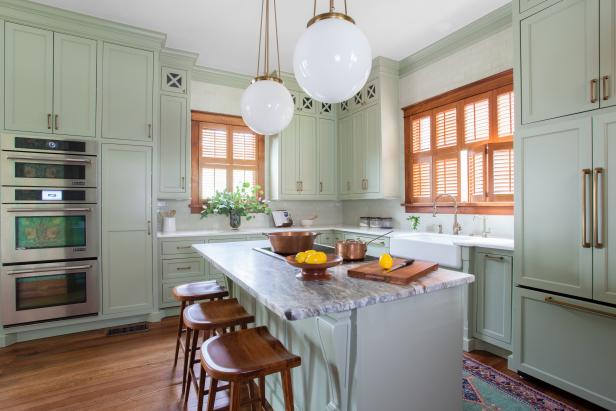
Hints of green in the stone countertops inspired the cabinet color in this country-style kitchen. The soft hue brings coziness to the space, yet still feels bright and fresh.
Butter Yellow
Particularly charming in a cottage- or farmhouse-style space, pale yellow adds a cheerful, sunny touch to a kitchen. Try it with robin’s egg blue or with neutrals, as seen in this kitchen designed by Sarah Richardson.
Navy Blue
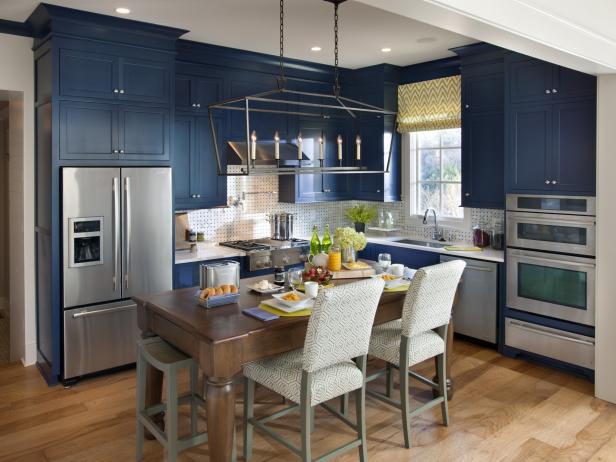
Navy is practically a neutral — it pairs beautifully with everything from tangerine to turqouise to chartreuse. In the HGTV Smart Home 2014 kitchen, navy cabinets are offset by a black-and-white basketweave backsplash for lots of eye-catching contrast.
BOLD COLORS
Go all in with these daring shades.
Crimson
Want to instantly energize your kitchen? Just add a vibrant shade of red. To keep it from feeling overwhelming, try contrasting it with a cool color, like the blue-gray Brian Patrick Flynn used here. If you’re not ready to commit to red cabinets or walls, incorporate the color in small doses with red countertop appliances, dish towels and other accessories.
Emerald Green
Just a splash of this gorgeous green will make a big impact in your kitchen. In this design, Andrea Schumacher painted only the island, pulling a color from the floral wallpaper to keep the space cohesive. For an ultra-rich look, pair emerald with other jewel tones.
Orange
Orange is thought to stimulate the appetite, making it an ideal color choice for the kitchen. In this space by Jennifer Gilmer, an orange backsplash and zebrawood cabinets add warmth, keeping the contemporary design from feeling cold. Smaller orange accents, such as pendant lights or window treatments, can also liven up a kitchen.
Banged up thumbs, crooked frames, and things that go crash in the night? Here’s how to do it RIGHT!
Who knew sticking stuff on the wall could be such a process? Keep your stud finder at the ready, friends! I’ve rounded up our top tips and hanging hacks to help you through the tedious task of decking out your walls. From stylish storage and pendant lights to extra heavy and delicate decor — every step-by-step you could possibly need is right here.
Hang Heavy Stuff
A heavy, antique mirror takes more than a hammer and nails. Get the full how-to for hefty hangings below.
Deferred maintenance on your gutters can cost you dearly. It’s almost as bad as having no gutters!
As a homeowner, you undoubtedly understand just how important home maintenance is when it comes to preserving the life of your home. In fact, you probably spend a good chunk of time fixing problem areas and items both inside and outside your home.
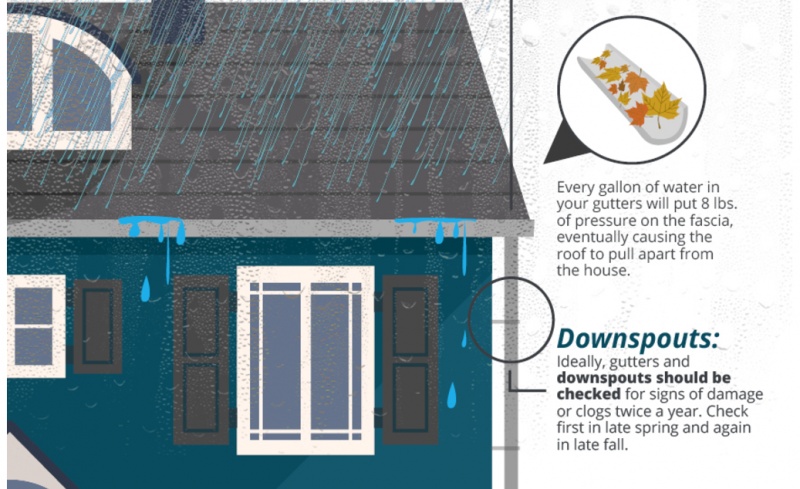
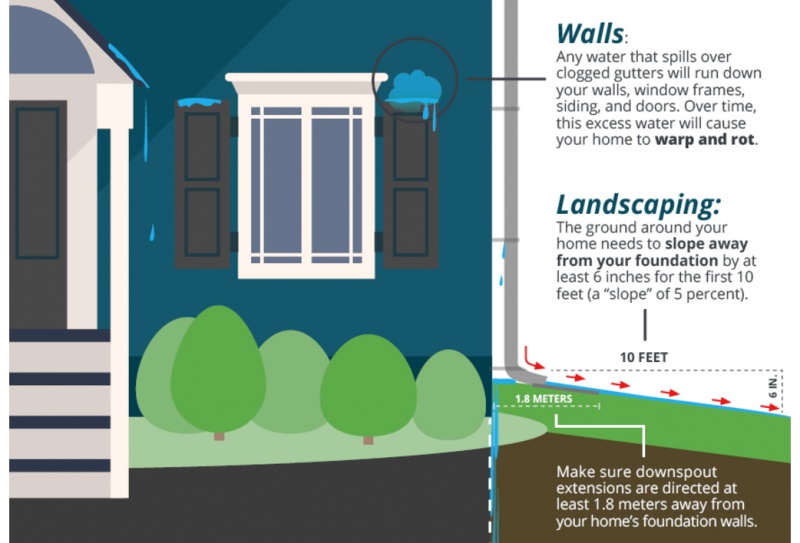
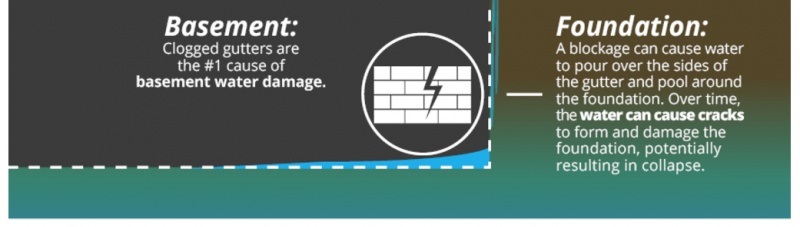
But when was the last time you checked the gutters? While clogged gutters can wreak havoc on your home from top to bottom, maintaining your gutters and downspouts will work in your favor when it comes to avoiding conditions such as flooding, foundation damage, pest infestation, roof damage, warped/rotted window frames, siding and doors, and mold—all of which may ultimately undermine the integrity of your home.
The following infographic from Kings of Clean sheds light on the important role gutters play in the well-being of your home.
Ahhhhh, that summer vacation is on your radar now…just a few loose ends to wrap up before you hit the road!
Your summer vacation is finally here! You’ve booked flights, reserved hotel rooms, and scoped out the best places to eat along the way, but have you prepared your home for your absence?
Nothing spoils a vacation like returning to smelly trash, sad houseplants, or an unexpected break-in. Whether you plan to be gone for a week or a month, there are a few simple steps you can take to get your home ready so you can relax and enjoy your time away.
Clean Up
Leave your home exactly as you’d like to find it when you return—like new!
Empty your refrigerator of any perishable foods that will pass their enjoy-by dates while you are away, and toss open pantry items that will mold or go stale.
Take out the trash and recycling. Don’t forget about smaller trash cans in bathrooms and utility rooms.
Finish, fold, and put away laundry. You’ll likely have clothes to wash when you return, so get a jumpstart before you go.
Wash your sheets and towels, and remake your beds. You’ll thank your past self when you come home to fresh linens in clean bedrooms and bathrooms.
Wipe down counters, run your garbage disposal, sanitize toilets, and organize clutter.
Close Out
Reduce the possibility of surprise maintenance issues, which can be costly to fix, by keeping up with regular home repairs throughout the year.
Perform routine inspections and weatherize. Make sure your heating and cooling systems, gas and water lines, and roof and windows are in good shape. Clean up your yard, mow the grass, and take care of any dead trees or overhanging limbs that could cause damage in severe weather.
Unplug all small appliances. This will save power and eliminate the potential for things to short-circuit and cause significant electrical damage.
Check your smoke detectors. Batteries die, parts wear out, and dust and other pollutants can impede alarm performance. Make sure your home is prepared in case of fire, and consider integrating your detectors into your home security system so the fire department is notified in an emergency.
Turn off your water at the main shut-off valve to prevent damage in the case of a burst pipe or water heater malfunction. Consider installing a water and flood sensor, which detects moisture where it shouldn’t be and pushes notifications to your smartphone.
Leave your closet doors ajar to prevent mold and musty smells from building up.
Secure
Protect your home and belongings from thieves. The highest percentage of burglaries occur during the summer months, and homes without security or alarm systems are up to 300 percent more likely to be broken into.
Set up remote monitoring. You can have a security system professionally installed or start with a wireless security camera that you can view from your smartphone. If you have a security monitoring service, let them know that you are traveling.
Collect spare keys. If you have house keys hiding under doormats or flower pots, bring them inside so prowlers don’t find them. Leave an extra set with a trusted neighbor or friend in case there’s an issue that needs to be addressed while you’re away.
Hold your mail and newspapers. Nothing signals that you are out of town like an overflowing mailbox or stack of unread papers on your front porch. Placing a hold with USPS is as easy as completing an online form and will prevent identity thieves from targeting sensitive information found in bills and credit card statements.
Take advantage of home automation. You can link everything from smart locks that you can triple-check via smartphone app to smart doorbell cameras that sense motion on your front porch and have two-way audio.
Close blinds into rooms that contain expensive items, and set up smart light timers that mirror your regular habits when you’re home.
Ask for help. Have a neighbor park in your driveway while you’re gone, and enlist a friend to water your plants and check up periodically on your property.
A little bit of preparation will go a long way when it comes to leaving your home clean and secure, and enjoying your vacation stress-free!
Come check out CBKG’s guide to the BEST 4th of July Celebrations in our area.
Lots of fun to had here people! Let’s Get out there and Celebrate!
Suisun City Independence Day Spectacular
Where: Suisun City, Harbor Plaza in the Waterfront District
When: July 4, 11 a.m. – 10:30 p.m.; Fireworks at 9:15 p.m. >> Details
Picnic in the Park and Fireworks
Where: Benicia, Benicia City Park
When: July 4, noon – 7 p.m., Fireworks at 9 p.m. >> Details
Six Flags Discovery Harbor July 4th Fest
Where: Vallejo, Six Flags Discovery Kingdom
When: July 2, 3 & 4, 10:30 a.m. – 10:00 p.m., Fireworks all 3 nights at 9:30 p.m. >> Details
Vacaville 4th of July Fireworks & Creekside Concert
Where: Vacaville, Andrews Park
When: July 4, 6:30 p.m., Fireworks at dusk >> Details
Fairfield Independence Day Parade
Where: Fairfield, Texas Street, downtown Fairfield
When: July 4, 10:00 a.m. >> Details
Napa County Fair & Fireworks
Where: Calistoga, Napa County Fairgrounds
When: July 4, 11:00 a.m. – 10:00 p.m., Parade at 11:00 a.m. Fireworks at 9:30 p.m. >> Details
Watch A’s Fireworks From the Field
Where: O.co Coliseum
When: July 2, after the A’s play the Pirates there will be a special “Salute to Armed Forces Fireworks.” >> Details
Celebrate Concord 4th of July
Where: Downtown Concord, Todos Santos Plaza
When: July 4, 8 a.m. – 10 p.m.; 5K/Kids run at 8 a.m., parade at 10 a.m., festival at 4 p.m. and fireworks at 9 p.m. >> Details
Alameda County Fair 4th of July Fireworks Spectacular
Where: Alameda County Fair, Pleasanton
When: July 4, Fireworks at 9:30 p.m. featuring the Oakland Symphony >> Details
Vallejo 4th of July Parade
Where: Vallejo, Downtown Vallejo
When: July 4, 12:00 a.m. >> Details
American Canyon 4th of July Festivities
Where: American Canyon, Community Park II
When: July 4, 10:30 a.m. – 10:00 p.m., Parade at 10:30 a.m. Fireworks at 9 p.m. >> Details
Dixon’s Family 4th of July in Hall Park
Where: Dixon, Hall Park
When: July 4, 8:00 p.m., Fireworks at dusk >> Details
Antioch’s An Old Fashioned Hometown 4th of July
Where: Antioch, Downtown Antioch & Contra Costa County Fairgrounds
When: July 4, 11:00 a.m. – 11:00 p.m., Parade at 11:00 a.m., Fireworks at 9:30 p.m. >> Details
West Sacramento Fourth on the Field
Where: West Sacramento, Rayley Field
When: July 4, 6:00 p.m. – 10:00 p.m.. >> Details
Pleasant Hill Fourth of July Celebration
Where: Pleasant Hill, Downtown Pleasant Hill & PH Aquatic Park & College Park High School
When: July 4, 8:00 a.m. – 11:00 p.m., Firecracker 5k fun Run at 8:00 a.m. Parade at 9:30 a.m., Fireworks at 9:15 p.m. >> Details
Napa 4th of July Festival & Fireworks
Where: Napa, Downtown Napa & Oxbow Commons & Veterans Park
When: July 4, 10:00 a.m. – 10:00 p.m. Parade at 10:00 a.m., Festival at 1:00 p.m., Fireworks at 9:30 p.m. >> Details
Folsom Pro Rodeo
Where: Folsom, Dan Russell Rodeo Arena
When: July 1-3, 6:00 p.m. – midnight. Gates open at 6:00 p.m., Live music at 9:45 p.m. >> Details
Sacramento Independence Day Celebration
Where: Sacramento, Cal Expo
When: July 4, 5:00 p.m. – 10:00 p.m. Gates open at 5:00 p.m., Fireworks at 9:30 p.m. >> Details

 Facebook
 X
X
 Pinterest
 Copy Link